Your address will show here +12 34 56 78
Dialect News

During April, all capacity building activities taken place in Greece, Hungary, Serbia and Italy were completed. In total, 8 training seminars addressed to football coaches and mediators & 4 training seminars addressed to civil servants were organized. Key stakeholders have been assembled and equipped with differentiated capacities and skills, in order to prevent and combat the spread of intolerance, with a focus on xenophobia, through football.


24 coaches and 51 mediators, both adults and adolescents, from all 4 countries, had the opportunity to be trained on football3 methodology, to discuss on fair play and identify the context, needs, challenges and possible solutions for their communities. During seminars, the coaches and mediators who will soon implement trainings, matches and tournaments, had the chance to meet each other and explore ways to successfully implement football3 methodology to youngsters.


As far as the capacity building activities addressed to civil servants are concerned, 39 representatives from local and public authorities participated in total. Through these encounters, opportunities for networking among local authorities were developed and existing cooperation was strengthened.

These agents of change are now ready to promote a shared understanding on preventing intolerance at community level. The capacity building actions have set the grounds for the implementation phase and the creation of impact in the targeted communities.

0

Dialect News

As Covid lockdown eased during the summer in Hungary, Oltalom Sport Association (OSA) could finally make face to face contacts with the participants of Dialect research target groups. During June-July OSA conducted 4 focus group discussions. A total of 24 people participated in the group discussions representing local authorities, civil society organisations and experts from the social and educational fields.

We focused on the organisations’ awareness of all issues linked to access to sport, the causes of exclusion and discrimination, and particularly on the role of football in adolescents’ life.
 

Based on results professionals (municipalities, NGOs, teachers and social workers) think that disadvantaged youth get access to sports through school and NGOs like Oltalom Sport Association. Girls’ participation in football is usually not encouraged and many times not accepted even at school. In case of migrant/refugee children football is not widely practiced before arriving to Hungary (depending on the place of origin), and migrant girls are often excluded – for religious reasons – from playing football.

Based on results, football in diverse teams, among others, has a strong integrating potential. Research also cleared up that football can particularly teach disadvantaged children how to live among rules, how to work in group and how to accept others more. Responded professionals all agreed that there is no political intention for the inclusion of disadvantaged children into club football in Hungary.

Based on their experiences, migrant/refugee children often face exclusion, jealousy, and long certification process to football clubs in professional football. Other non-migrant disadvantaged children usually drop out, as official football clubs are less tolerant e.g. regarding absence. Professionals are aware of the role extreme political groups play in football hooliganism in Hungary. However they cannot share evidences about their influence in youth football. Professionals agree that creating accepting community is one of the most important elements of equipping youth against discrimination. Neither involved municipalities nor NGOs have heard about Football3 before, but they all agree that f3 is an innovative method for reducing discrimination and strengthening acceptance.


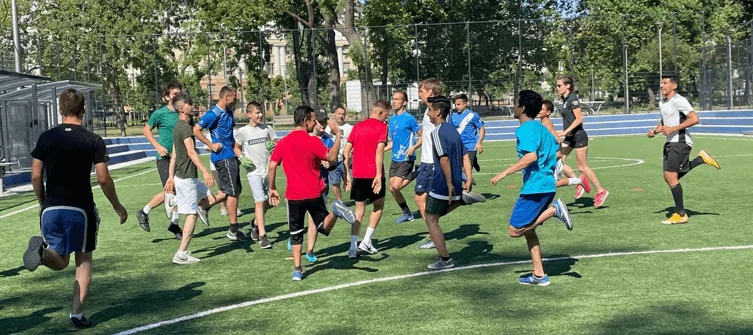
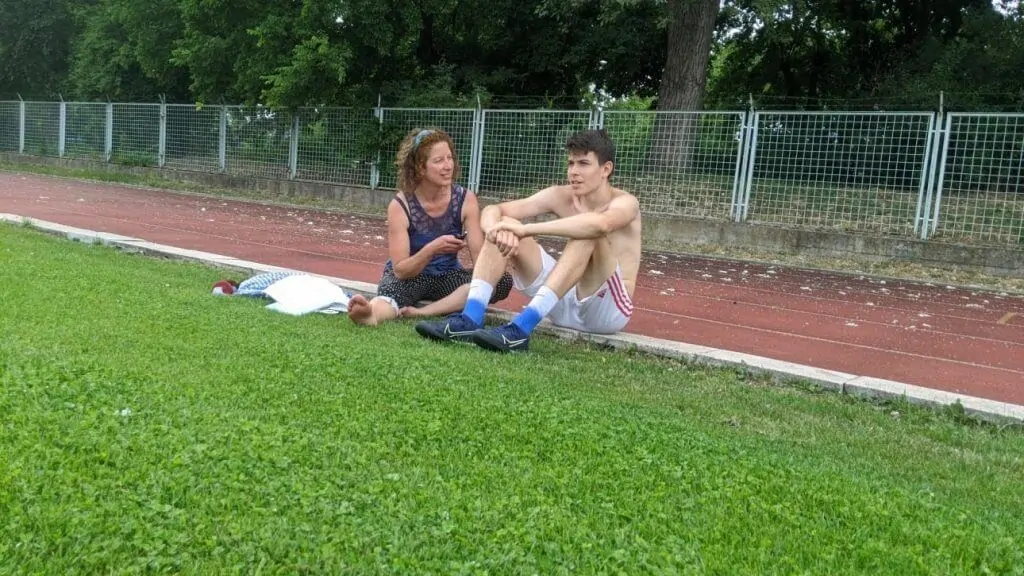
Beside focus group discussions, OSA conducted 20 in-depth interviews with adolescents (10 adolescents with a migrant background, and 10 adolescents with a non migrant background) as part of the fieldwork of Dialect research phase. All interviews were conducted in Hungarian, and most of them took place at OSA’s regular open air football training.

Interviews cleared up that migrant and non-migrant youth in the sample are usually not attracted to Hungarian football clubs. All of them disapprove of the extreme behavior of football fans. Interviewed adolescents do not know anyone in person who belongs to such extreme circle, and none of them watch matches live anymore as violence became common at Hungarian pitches. Based on adolescents’ testimonies it seems that children’s attitudes about migrants and other disadvantaged groups (including Roma) depend on their family belief which is often fed by governmental propaganda. If parents think that it is right to be afraid of migrant/Roma people then children will find foreigners/Roma scary. Though respondent migrant youth living in Hungary for a long time do not identify themselves with migrants of the anti-migrant propaganda, more than half of them could recall stories of discrimination happened to them at school. Interviewed youth would not discriminate anyone because of origin or poorer football skills. Most of them think that their football community is accepting, but their friend’s circle is usually more excluding and judgmental.

0

Dialect News

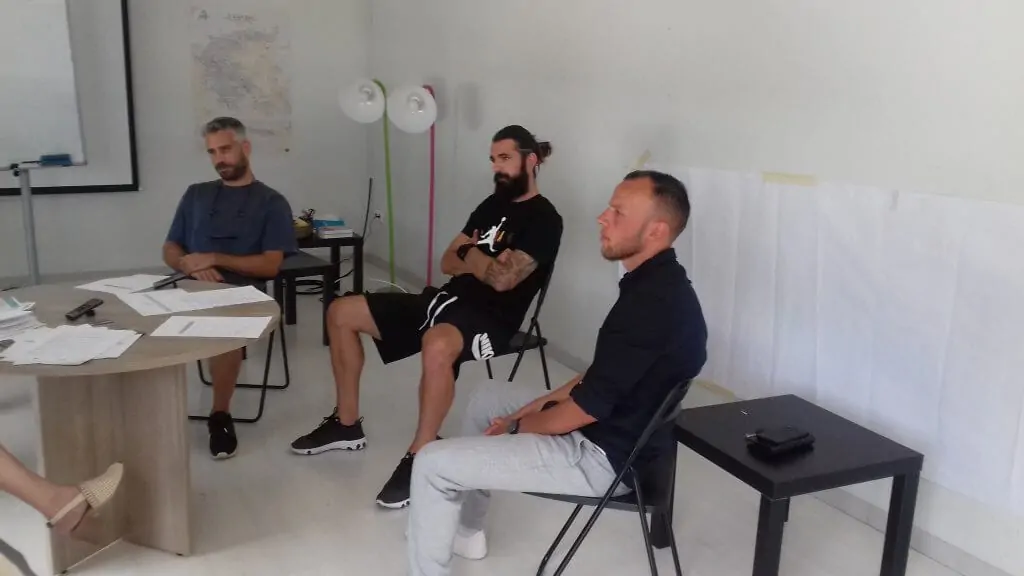
The previous month all entities taking part in Dialect project (organizations from Greece, Italy, Hungary, Serbia, and Germany) met online to discuss on the projects progress, results, and next steps.

Throughout the two-day meetings the main results of all countries research, led by the National Centre of Social Research (EKKE), were discussed.

Among those the most important were that youths are highly vulnerable and susceptible to populist parties’ campaigns, which tend to simplify complex realities, disseminate political cynicism and increase racial stereotypes. ​Moreover, there is a need for powerful and innovative tools for community building within the space of social and political polarization. ​ Sports in general and football provide opportunities to developing such tools. ​

Research results underlined football’s positive impact on young people’s sense of self, and appreciation for and engagement with peers from diverse backgrounds. Research has also revealed unanticipated connections between participation in football activities and learning foreign languages, positive engagement with school, and building self-confidence.

On the other hand, strong persistence of prejudices towards players, referees, coaches or managers was noticed. In addition to the problem of gender-based discrimination. Racism in football in all partner countries was noticed to have cultural roots. Making clear that the weapon to combat racism cannot only be repression, but intervention from a cultural and educational point of view. 

In all four countries aspects of racism, intolerance and xenophobia promoted against the acceptance of “otherness” and multiculturalism at community level, were identified and witnessed. These affect not only migrants and women but, all kinds of ‘different others’.

Within this framework, and since young people are extremely attracted by football and shaped by values surrounding it, Dialect seems to be on the right track to set the grounds for changes in the sport. What means, creating and promoting a more viable football form, where we could play all together being open and solidary. And in this way, also shaping our communities in similar basis.

0

Dialect News

Despite the Covid-19 situation and relative precautional measures, ActionAid Italy managed to organise three DIALECT focus groups in September, in Naples. We met and discussed with representatives of local authorities and institutions, of NGOs and with parents.

The first meeting took place with the patronage and presence of Ciro Borriello – the Naples City Councillor for Sport – and other local and sport authorities’ representatives, including FIGC (Federazione Italiana Giuoco Calcio) and CSAIN (Centri Sportivi Aziendali e Industriali). We focused on the institutions’ awareness of all issues linked to access to sport, the causes of exclusion and discrimination. More in detail, we analysed structural shortcomings and the limits of intervention by institutional agencies on the spread of feelings of intolerance and hate speech.

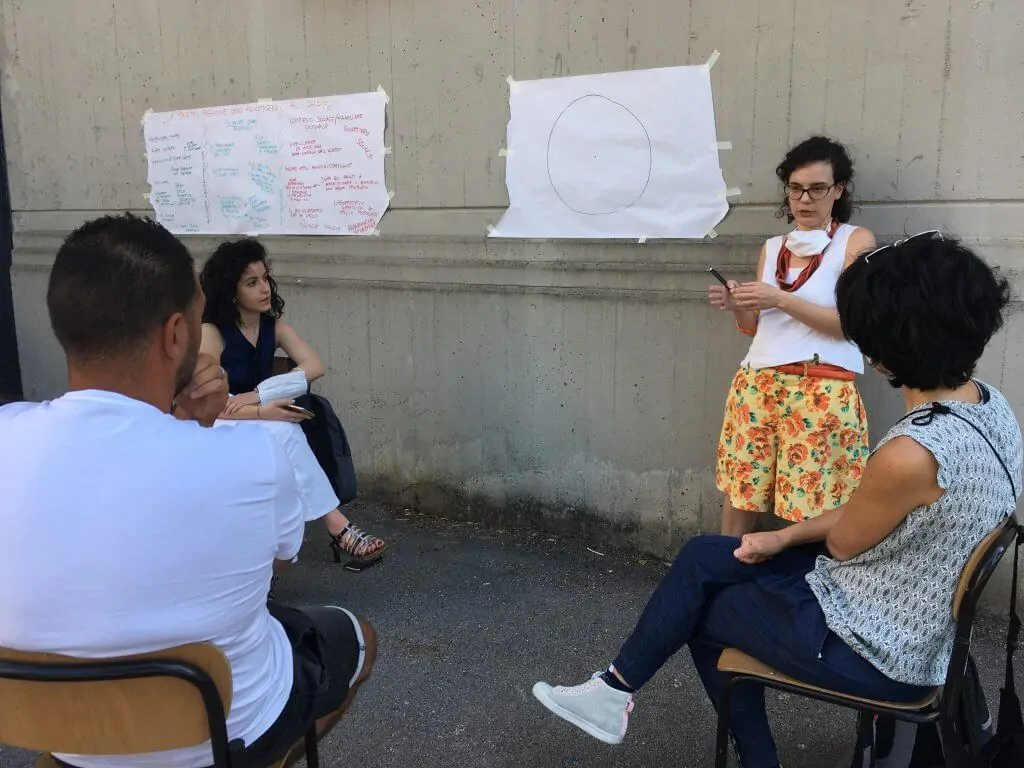
In the headquarter of Dream Team Association, a women’s football team from Scampia – north suburbs of Naples – we discussed with NGOs’ local operators and experts on human rights and protection of migrants about associations’ limits in building intervention networks with other metropolitan areas, the challenges to tackle institutional authorities’ indifference, and the issue of sport’s exploitation for spreading hate speech and narratives. Through the ActionAid’s Reflection-Action methodology “Chapati Diagram” and group work, we structured a path to identify relevant actors and actions to be implemented.

A third focus group was addressed to the parents of the adolescents participating in the DIALECT project. We had six participants – both in presence and online – among Neapolitans and parents with a migrant background. We discussed the issue of access to sport: the exclusion for the weakest section of the population, the lack of inclusive capacity by federal authorities of migrant youth in sports and of cultural intervention on women’s football promotion.

Finally, we had the chance to interview ten adolescents with a migrant background and ten Neapolitan adolescents. We were impressed by their maturity and independence in their personal and sport life:

“If I hear my dad – said Manuel (12 yo) – calling a player ‘nigger’, I’ll think at least for one second that he can be right, even if I rationally know that he isn’t”.


What have we learned so far?

The world of children, centred on sports activities, is basically extraneous to discriminatory behaviours and episodes. However, the influence of adults – those seen on television and those who surround them daily – is decisive to drag them into a negative vortex from which many will not succeed to go out.

Focus groups cleared up the awareness that sport can be fundamental for building the consciences of the youngest, contributing to the establishment of a system of values, based on the respect for others, the community and sharing. Nonetheless, the occurring of discrimination episodes and the lack of actors able to lead youth towards a sport and personal virtuous path let sport become an outlet for socioeconomic and ethnic exclusion.


0

Dialect News

During June, the National Centre of Social Research (ΕΚΚΕ) together with ActionAid Hellas and with the support of Melissa Network of Migrant Women in Greece, organized the focus groups in Athens.

Within the framework of Dialect project, discussions and interviews took place regarding the perceptions towards football.

One of the groups was with representatives of public and municipal authorities, football experts, NGOs and CSO’s staff. According to one of them “in football but also in sports in general, there is a sense of unity“. In Greek society and internationally, football is traditionally the most beloved and most popular sport, it promotes unity, respect and solidarity and children are not divided, on the basis of their economic status or social class. “Everyone becomes ‘one’ in order to enjoy their favorite sport“. In the same mood another one noted that “it (football) gets them one ‘desire’, one aspiration … to succeed, one endeavor to do… to play“.


Focus groups with parents were also organised, while parallel to this & face – to- face interviews with migrant and non-migrant adolescents took place. Our aim was to underline the main opinions towards football. “All football matches should be like a friendly match. There should be competition and hard work but not violence. Violence offends sport and the fans” and “I’ve friends at school and also at the platia close to my house. We play football 2-3 times per week. We don’t go at the same school; we are not from the same country, but we meet and play. It is fun!” were some of the things youngsters told us.

What we noticed?

Football brings on a feeling of belonging and happiness in achieving goals. It includes many adolescents that feel excluded in their school environment or neighborhood, due to their nationality or socio-economic status.

0

Dialect News

During June Football Friends organized 5 focus group meetings, on the research framework, with relevant research participants who shared their knowledge and experience which helped us make a clear image of the situation in Serbia. A total of 24 participants participated in meetings – 12 were parents of adolescents, and the rest were representatives of local authorities and civil society organizations. Football Friends gathered members of various CSOs who are involved in either sport or migration topic – Refugees Foundation, Refugees Aid Serbia, Erasmus Student Network BelUPgrade, Sports association of the Faculty of Philosophy, but also members of state institutions dealing with sports activities and youth education.

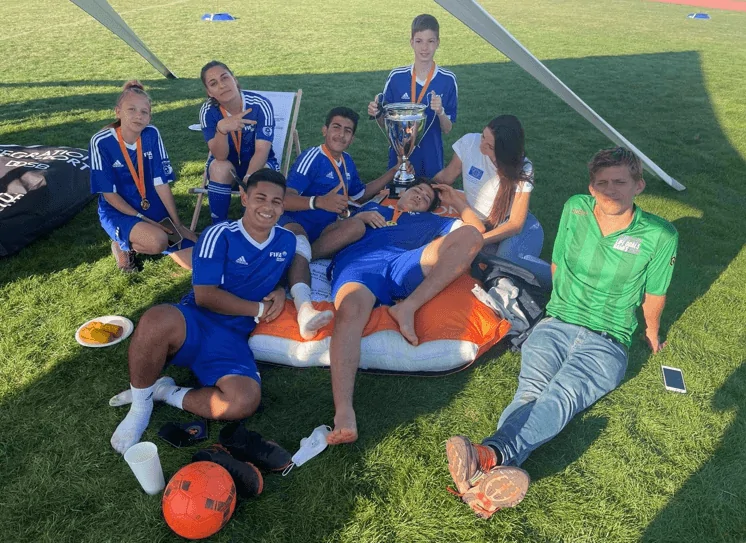
Beside focus group meetings, Football Friends held 20 deep interviews with adolescents, 10 of them were boys and girls of Serbian nationality, and 10 of them were young Afghans, who are settled in Asylum center Krnjaca, Belgrade. Some of the interviewees have already been familiar with football3 and they have participated in tournaments organized by Football friends. The rest of them were introduced with it by interviewers.

All of them expressed their wish to be part of the next activities, as they enjoy playing football and making new friendships through the game.


Photo: © Football Friends

0

Dialect News
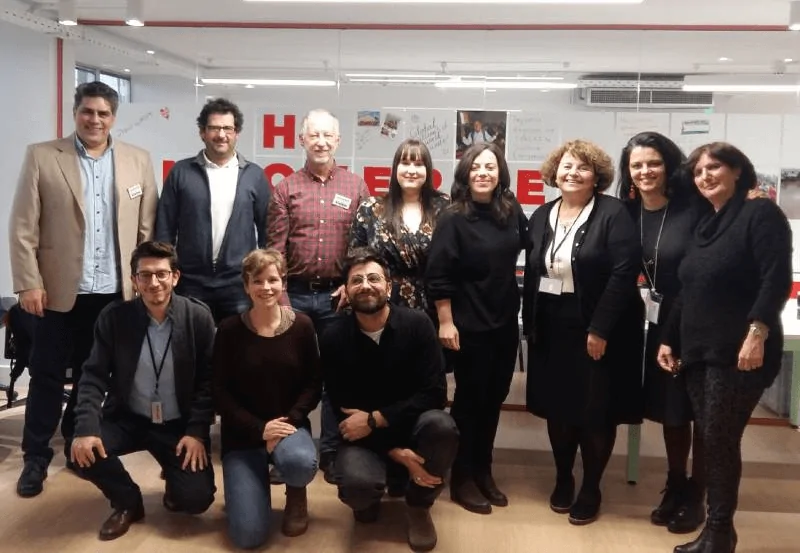
All partners involved in the project had the chance to meet during January 2020 in the headquarters of ActionAid Hellas in Greece. There, it was feasible to discuss face to face all relevant topics such as the management, development and implementation, communication and challenges of launching the project.

What was jointly agreed was the belief that football can bring a huge difference in communities and young people. Acting as a strong motive football and sports in total allure youngsters and help them get involved. 

With the moto “Football for ALL” the partners completed the 2-day meeting in Greece, positive that their vision for tolerant and societies of solidarity is possible.

Stay tuned!


0