Dialect 4 News
Naples, Italy — Before the match even begins, the players sit in a circle. There is no referee, no whistle and no fixed rules. Instead, the young participants decide together how the game will be played. This simple moment of dialogue lies at the heart of football3, an approach that transforms sport into a space for learning cooperation, respect and conflict resolution.
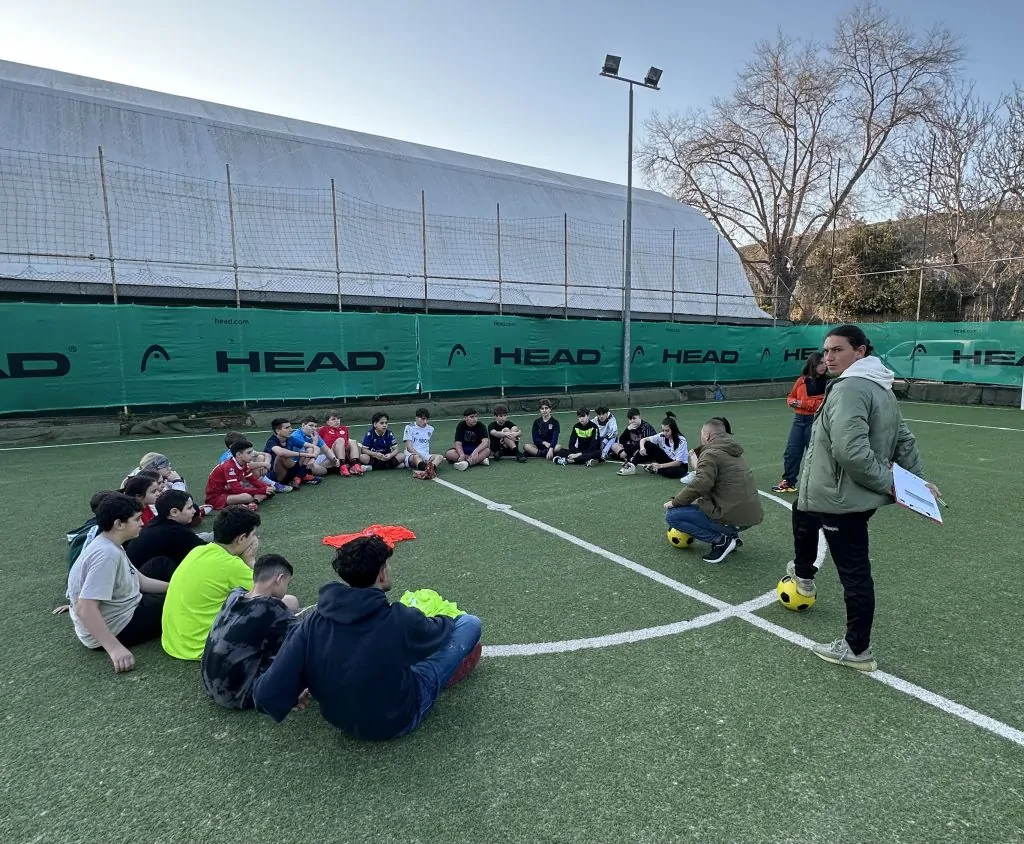 Caption: Young participants gather in a dialogue circle before a football3 match, setting their own rules together.
The methodology is being implemented in Naples as part of the DIALECT4 project, carried out locally by ActionAid Italy in collaboration with local educational centres. The project combines sport and media literacy education to promote inclusion, critical thinking and respectful communication among young people.
As part of its recent activities, the ActionAid Italy team in Naples organised an event in collaboration with the Local Gathering Space (Spazio Aggregativo di Prossimità – SAP San Laise) of Quadrifoglio social cooperative . The activity brought together around 40 participants, who participated in several football3 matches and dialogue moments designed to promote cooperation, respect and fair play.
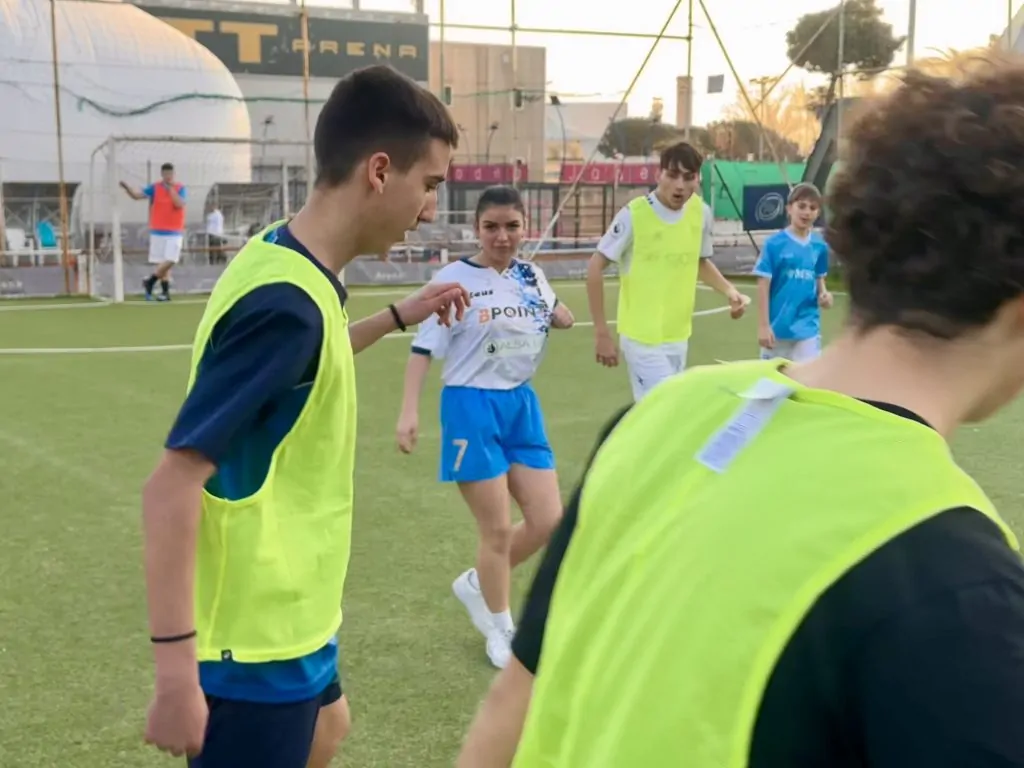
Caption: Boys and girls play a football3 match together, putting teamwork and fair play into practice.
Unlike traditional football, football3 is played without a referee. This figure is completely replaced by a community mediator, usually a young person with the role of observer of relational dynamics.
Before the match begins, participants gather to discuss and agree on the rules of the game. After the match, they meet again in a dialogue circle to reflect on the experience, discussing topics such as fairness, teamwork and mutual respect.
For the mediators, this moment of reflection is just as important as the match itself. It encourages young people to listen to each other, resolve conflicts peacefully and take responsibility for their actions on the field.
While this community activity offered a practical introduction to the methodology, the core implementation of the DIALECT4 project continues in the school environment. At Istituto Comprensivo “Michelangelo Augusto” in Naples, students participate in training activities that combine sport with media literacy education.
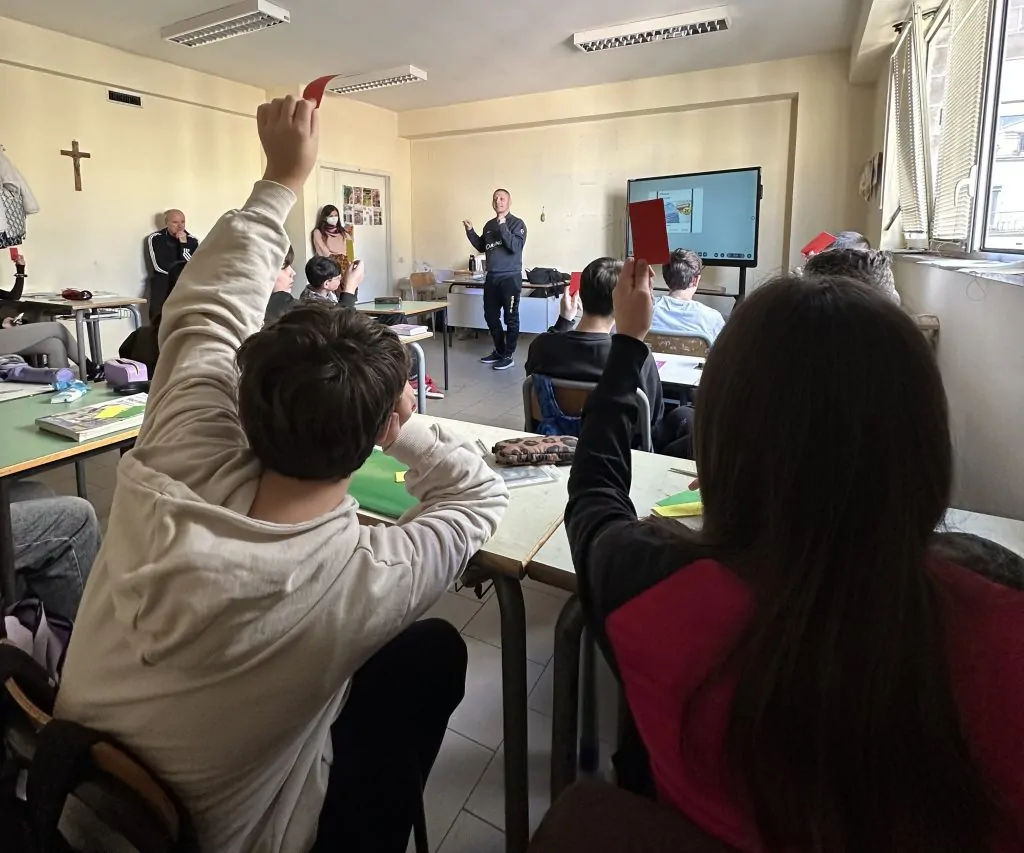 Caption: Students raise red cards against hate speech and fake news during a media literacy session.
Through these sessions, students learn to recognise hate speech, misinformation and fake news, strengthening their critical thinking and digital awareness. In one activity, students symbolically raised red cards against hate speech, connecting the language of football with the values of respectful communication and responsible online behaviour.
The project is implemented with two age groups — 10–12 years old and 13–17 years old — allowing the activities to be adapted to the participants’ age and learning needs.
By combining sports activities with media literacy education, the DIALECT4 project creates safe spaces where young people can express themselves, learn from one another and develop the skills needed to challenge discrimination and misinformation both online and offline.
Whether in a classroom discussing digital awareness or on a football field negotiating the rules of the game, the project demonstrates how sport can serve as a powerful tool for dialogue, inclusion and positive social change among young people in Naples.